Robotic additive manufacturing for ephemeral sand structures
Swiss Federal Institute of Technology in Zürich (ETHZ) MAS Thesis
Year : 2021
Place : ETH Zürich, Switzerland
Author : Chan Yen-Fen
Supervisors : Jesús Medina, David Jenny
Material Consultant : Anna Szabó
The thesis paper can be found HERE
Robotic Sand Dropping (RSD) explores a robotic additive manufacturing technique for remotely depositing sand droplets to fabricate ephemeral sand structures. With no strong architectural precedents, it starts with the development of an incipient fabrication method to understand the material behavior of the robotic sand dropped structure.
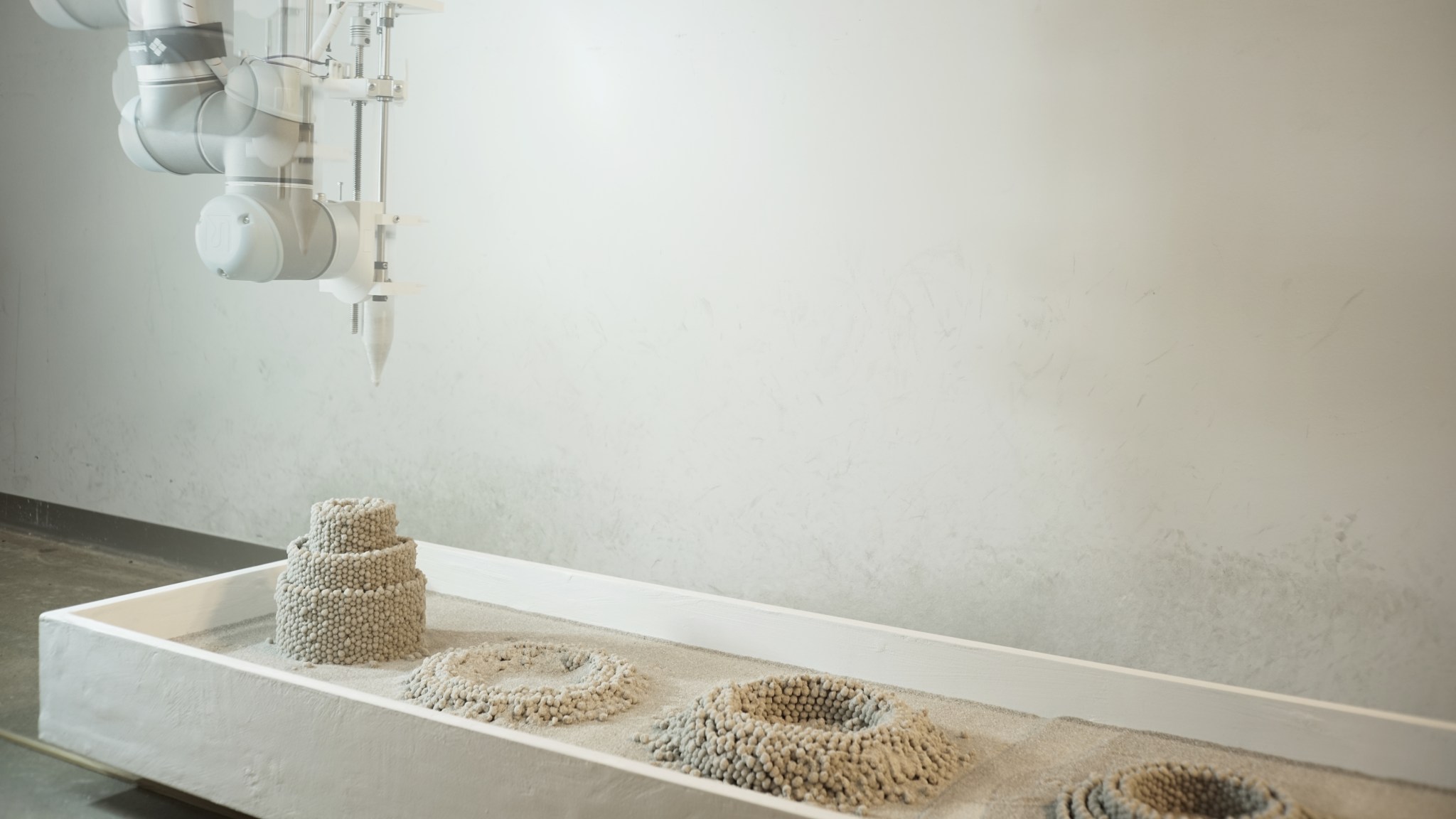
The main mechanism of RSD is based on capillary action that happens when wet granular matter drops onto a liquid-absorbing surface like a bed of dry sand. Given the fact that sand grains have no cohesive forces to bind each other, mixing with a liquid binder helps them become manipulable. Upon impact, the liquid in the droplet instantly forms micro liquid bridges, seizing the grains on the bed. Such a sand structure has a limited lifespan since the containing fluid medium evaporates over time, and the structure starts collapsing afterwards. Although this feature limits the permanence of the artefact, it provides potential to create momentary spatial experiences with a fully recyclable fabrication process.
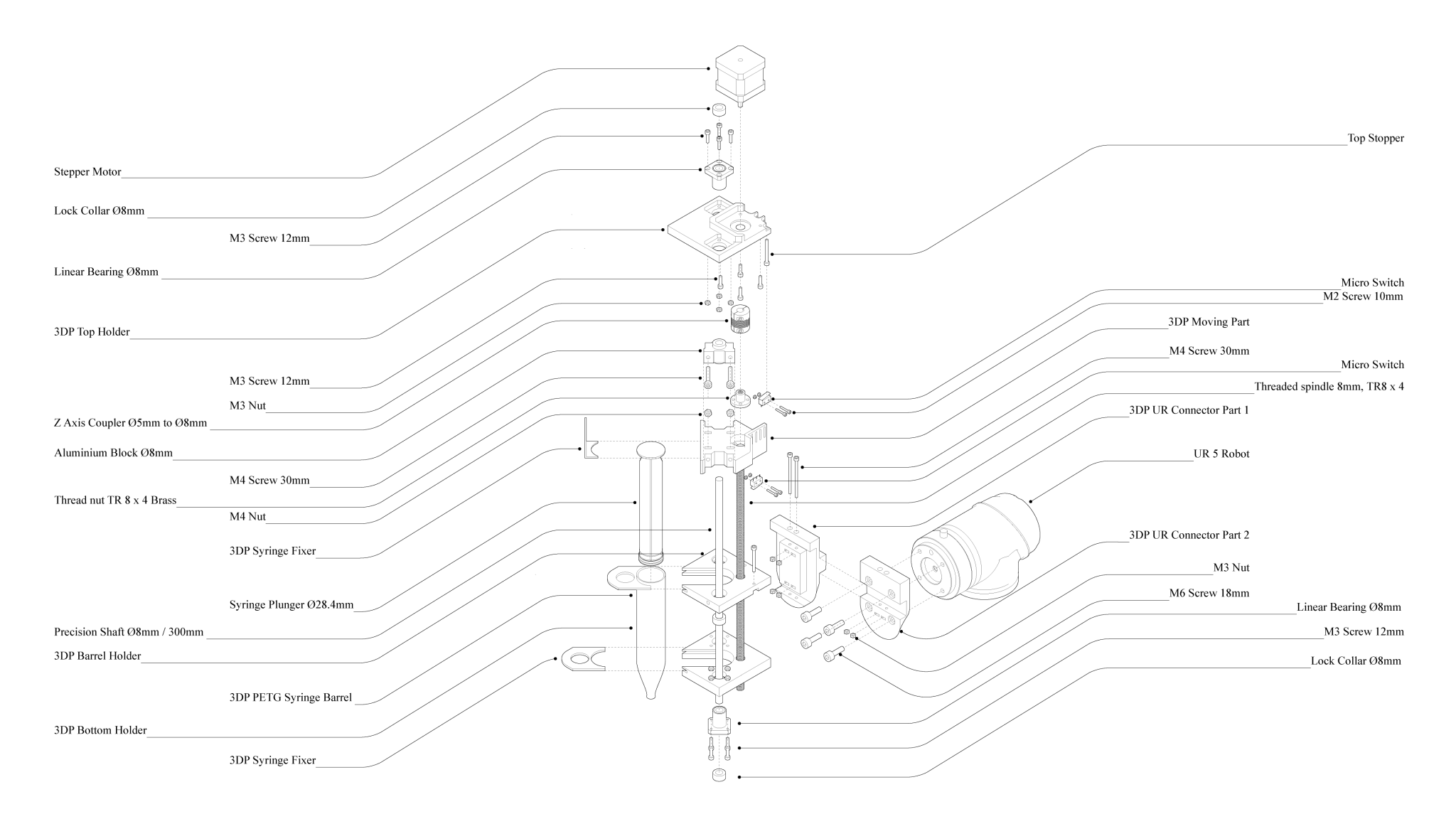
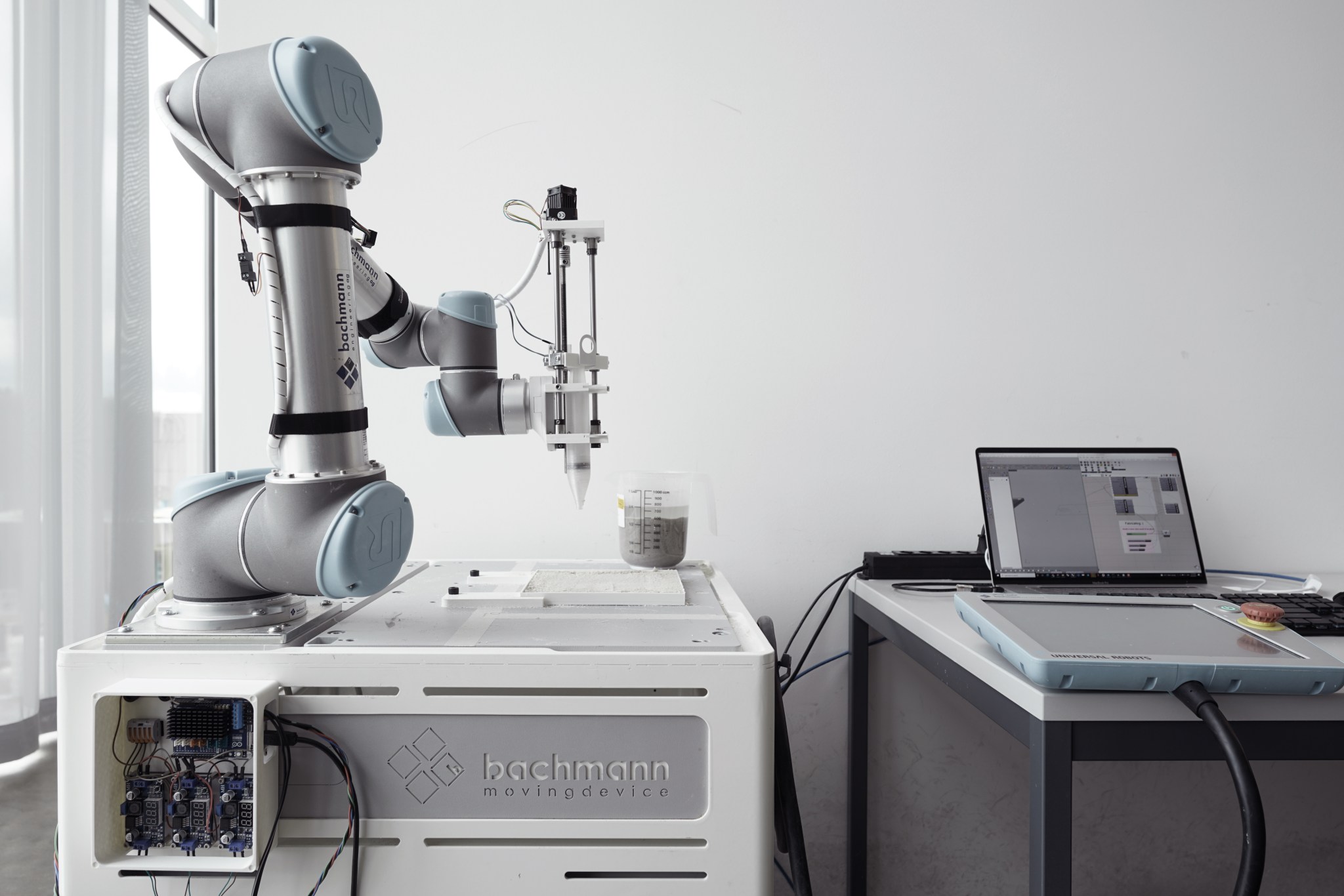
In order to seek possible temporary spatial performances and applications of RSD, it first requires the development of a custom-made end-effector. The principle is to keep the mechanism simple without using external forces to deliver material. The final design adopts a syringe system with a ⌀6mm barrel nozzle and a plunger driven by a stepper motor alongside the shafts.
On the other hand, the uniqueness of RSD is it is flexible in adding dissolved material into water and easily manipulates the lifespan of the sand structure. To showcase the result, RSD uses natural material salt as the solidifying agent. Unlike mixing water with sand, the crystallization of salt strongly binds sand particles in the end. By using multiple binding materials, different fragility and temporality are introduced to the sand artifact.


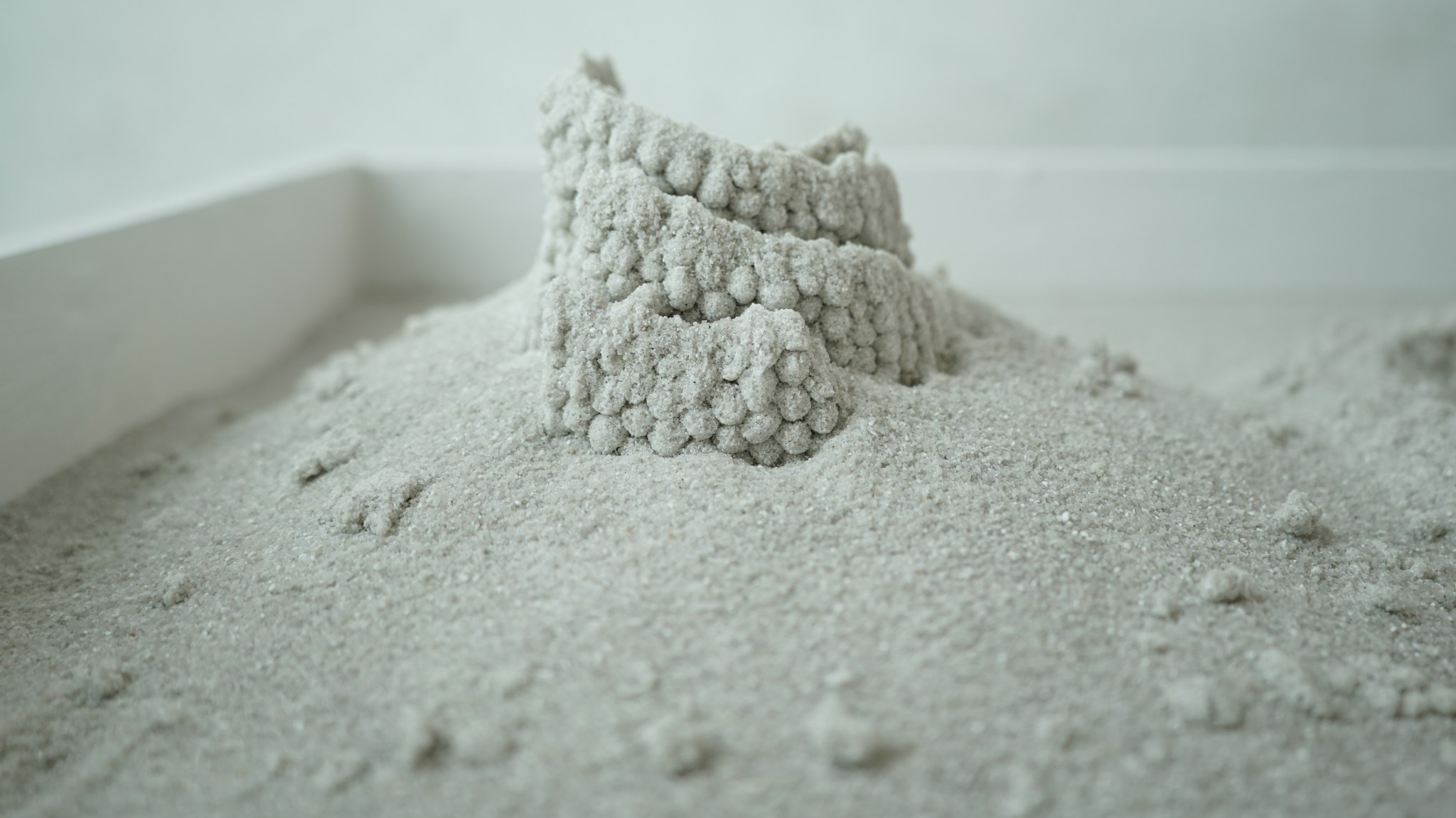
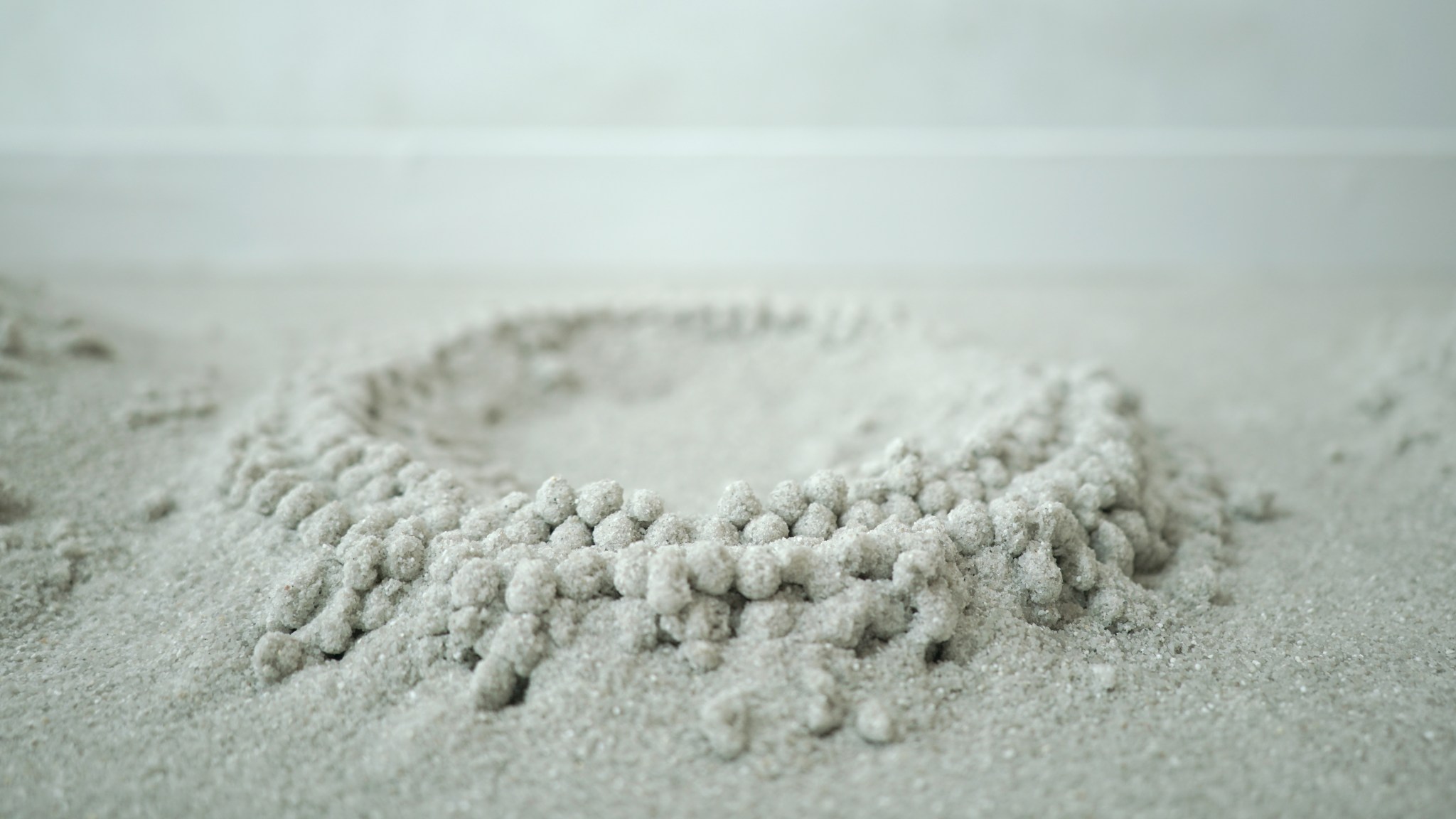
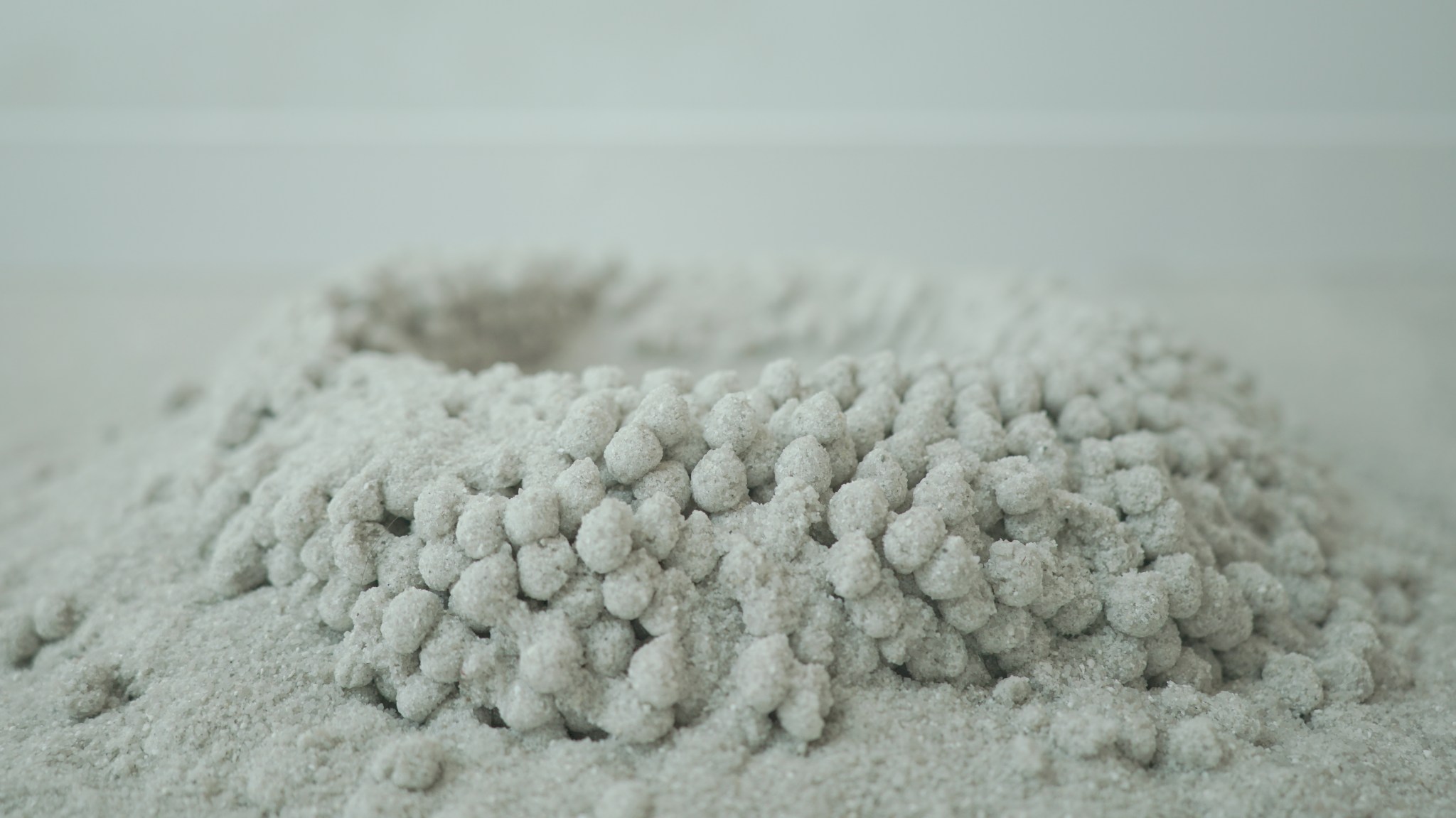
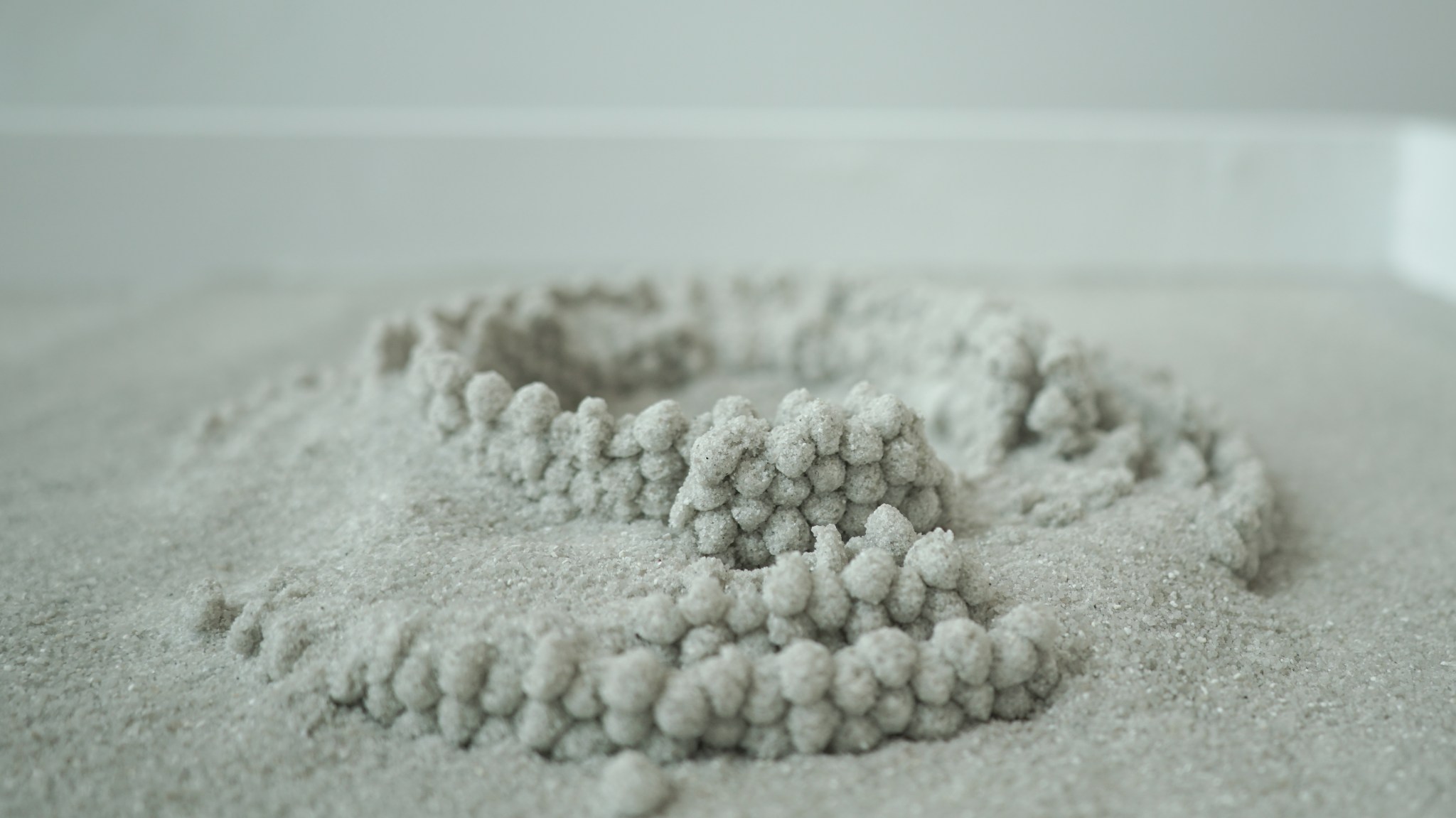
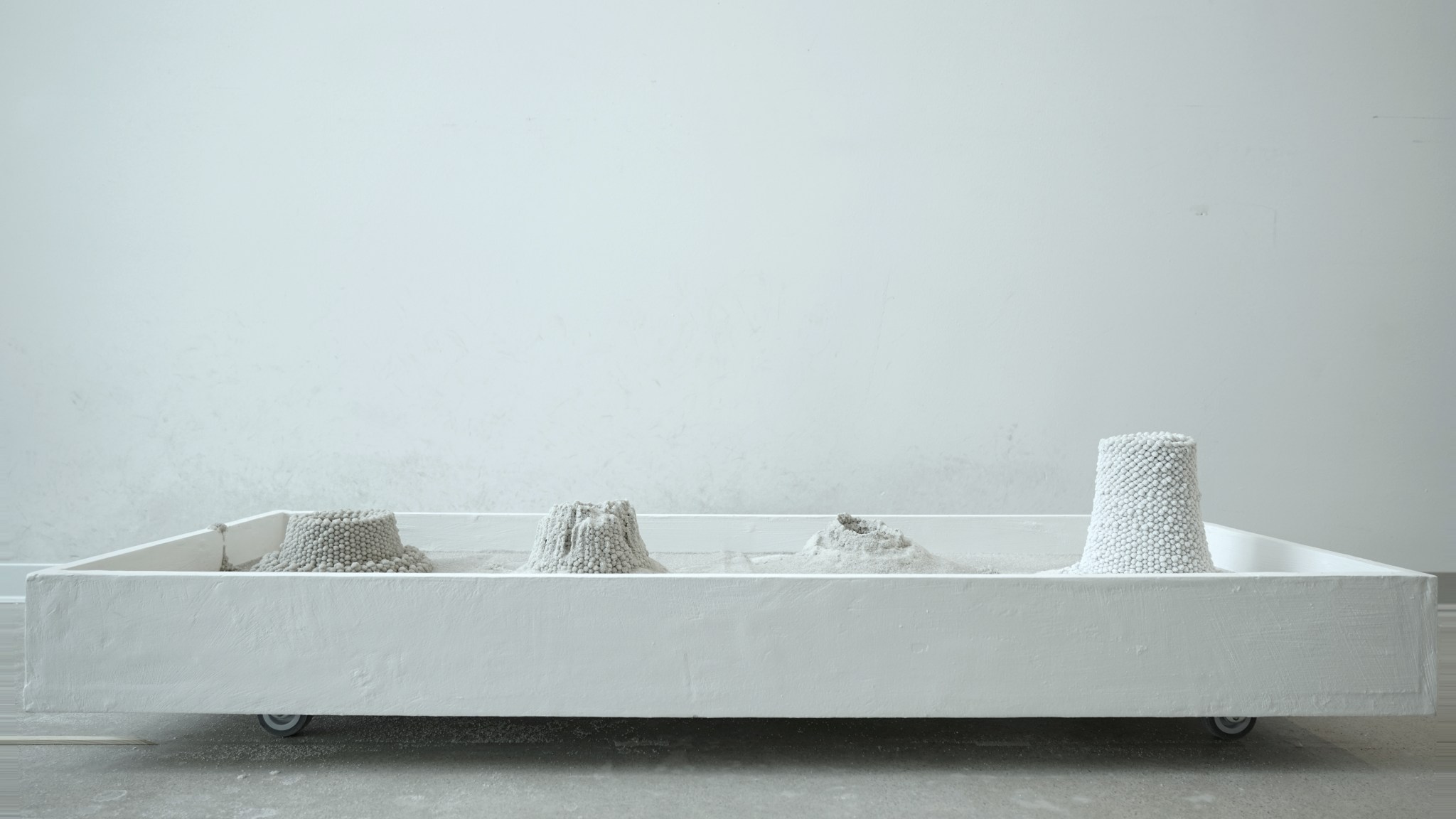
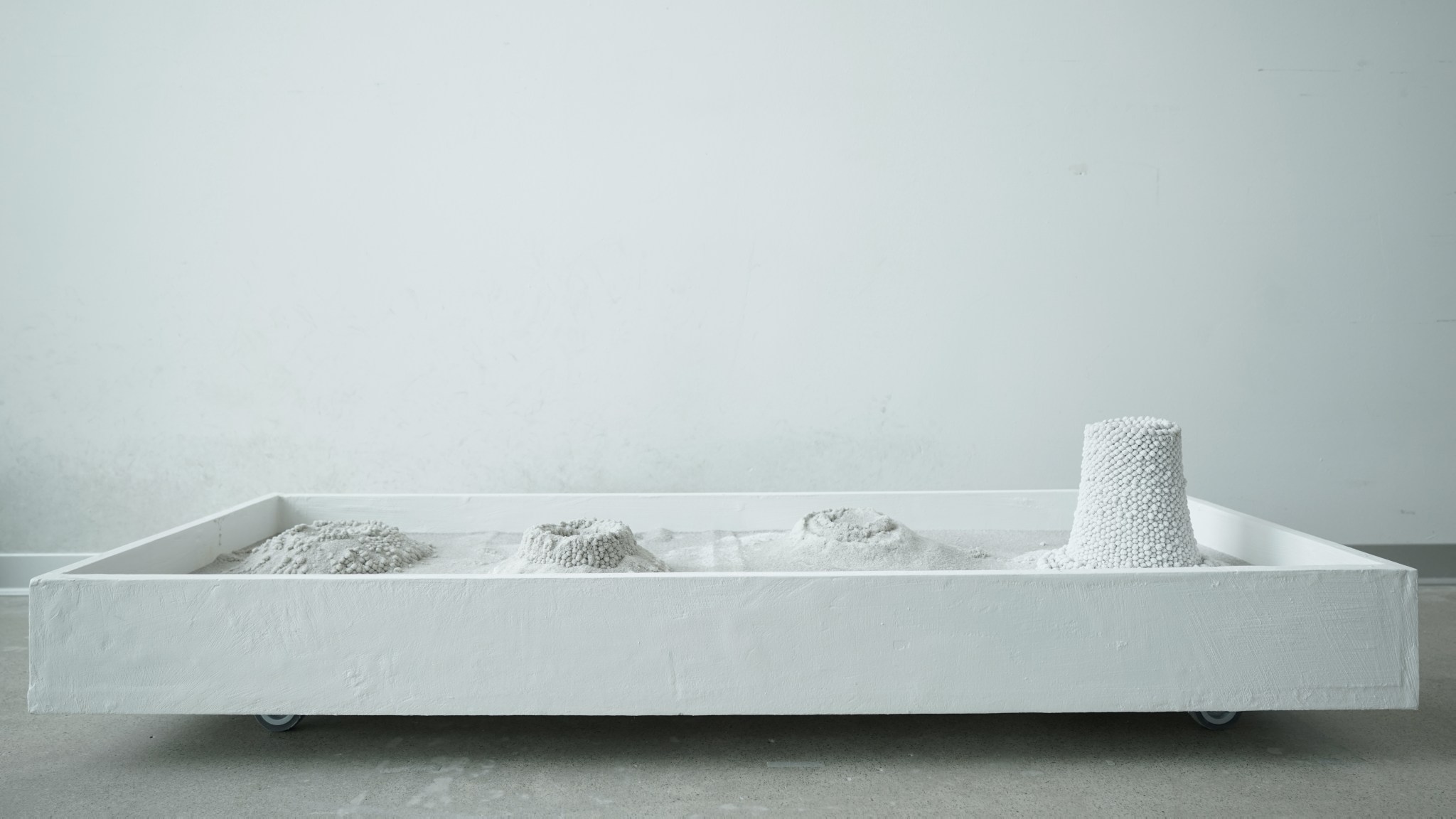
The design of the final demonstrators is a multidisciplinary showcase that presents various fragility and temporariness on four prototypes in a 120cm by 50cm box. Four of them are all from the same digital input, which is a double curved geometry in a height of 20cm but dropped with different proportions of pure water and salt water material. Various extents of erosion can be observed on prototypes 1 to 3 over time, but there is no single droplet collapsing on prototype 4, showing it is possible to manipulate the lifespan for the sand structure by using different binders and keeping the sustainable feature of RSD.
 Chan Yen Fen