Robotically Enhanced Glass Architecture
Year : 2021
Place : Swiss Re Centre for Global Dialogue Rüschlikon, Zurich(Sept-Oct 2021).
Role :
Phase 1 – Parametric modeling and scripting of 3D printed mold geometries for glass shaping, using algorithmic design and simulation tools.
Phase 2 – Robot calibration, toolpath tuning, and photographic documentation of the fabrication process.
The Project in Numbers :
Dimensions : 4 x 6 m, 2.5 m ht.
Glass facade : 36 sqm of glass panels
Weight of pavilion : 3000 kg
Printing time / panel : 1 hr
Kiln time / panel : 1 2 + hr
On site assembly : 2 days
Design to production : 11 weeks
Instructors : Rena Giesecke (project lead), Ioanna Mitropoulou, Rémy Clemente, Eleni Skevaki, Yael Ifrah
Design and Fabrication Team : MAS ETH in Architecture and Digital Fabrication_Class of 2020-2021
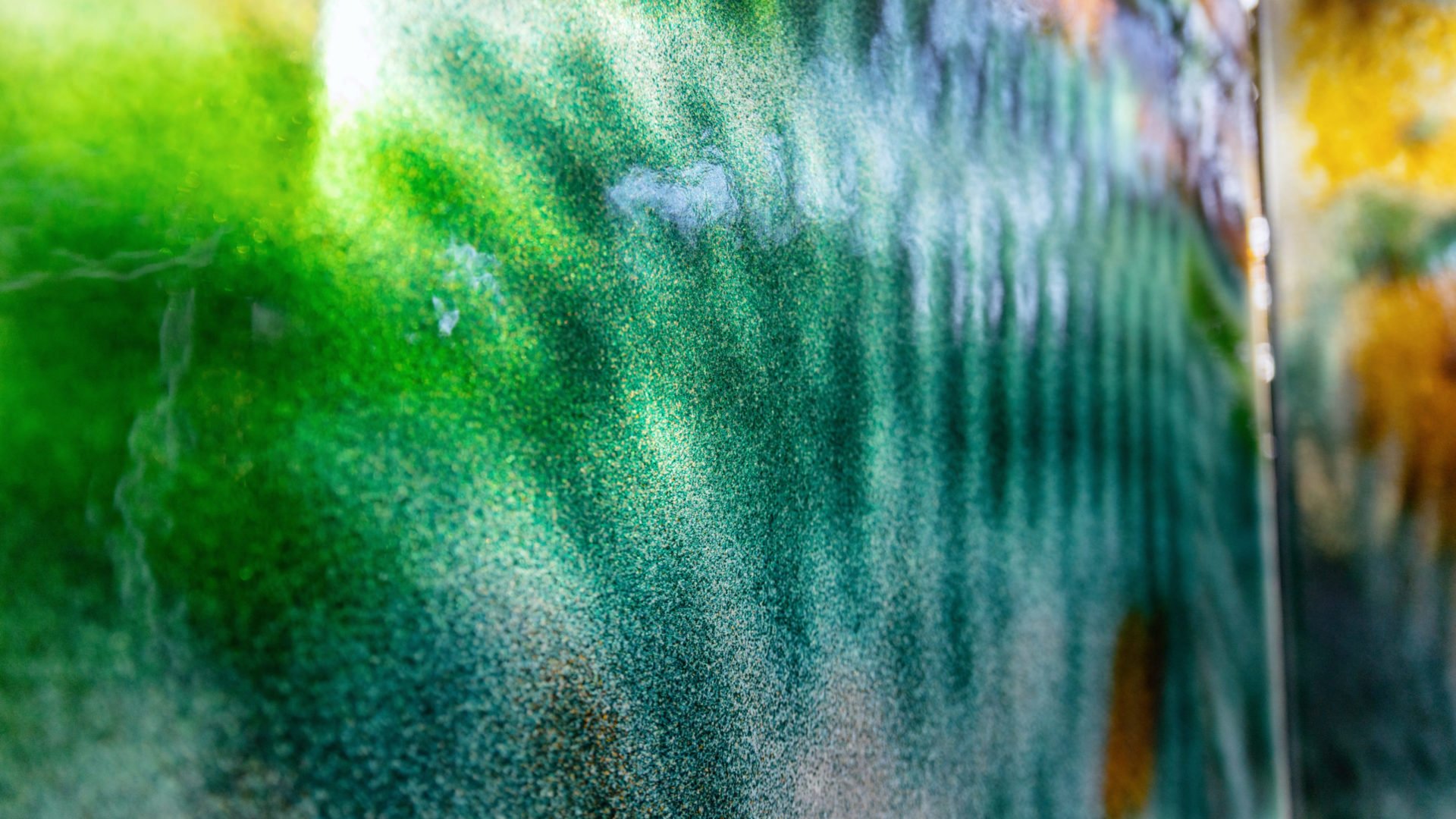
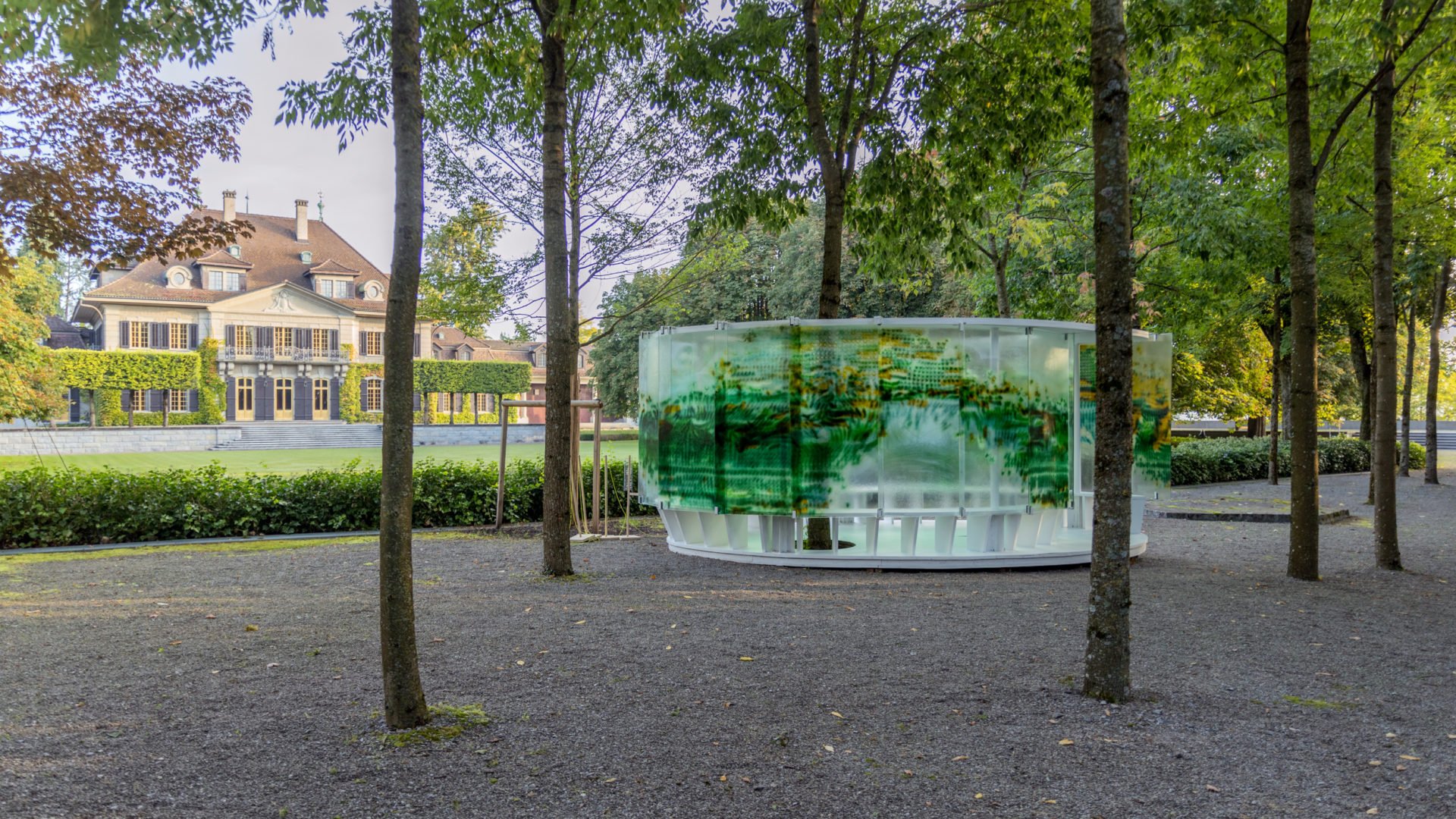
The Beyond Transparency pavilion investigates how Additive Manufacturing (AM), computational design, and digital fabrication can transform conventional float glass. Developed at ETH Zürich’s Digital Building Technologies (DBT) chair, the project introduces a novel robotic process capable of producing polychromatic glass as a mono-material system, varying in color and texture.
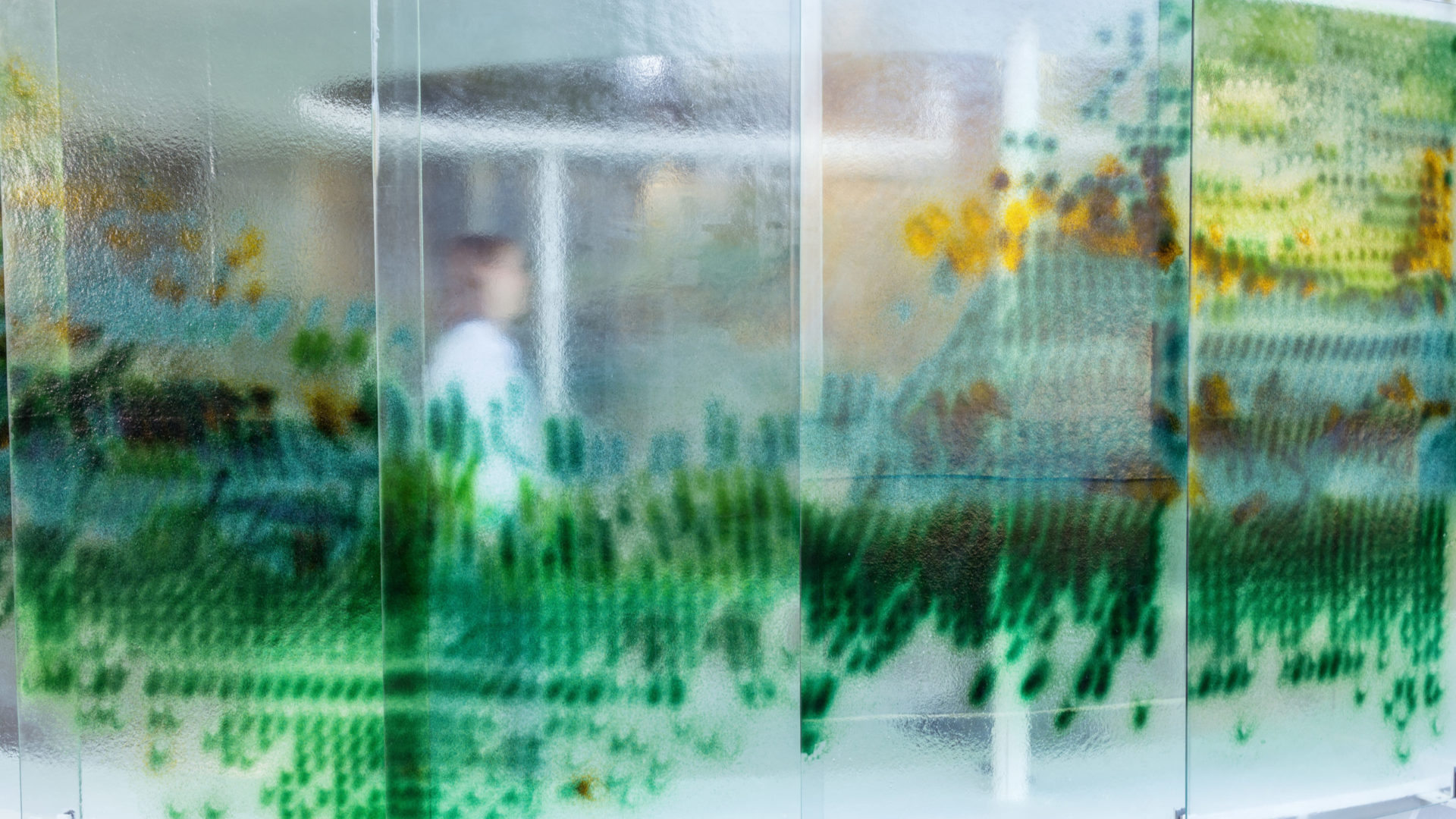
As part of the MAS in Architecture and Digital Fabrication (2020–2021), students explored the design potential of this technique within an 11-week intensive. The project highlights the interplay of fabrication logic, material behavior, geometry, and color, culminating in a full-scale pavilion composed of 18 unique, robotically produced 2×1 m glass panels—each fabricated and kiln-formed in-house at ETH Zürich.
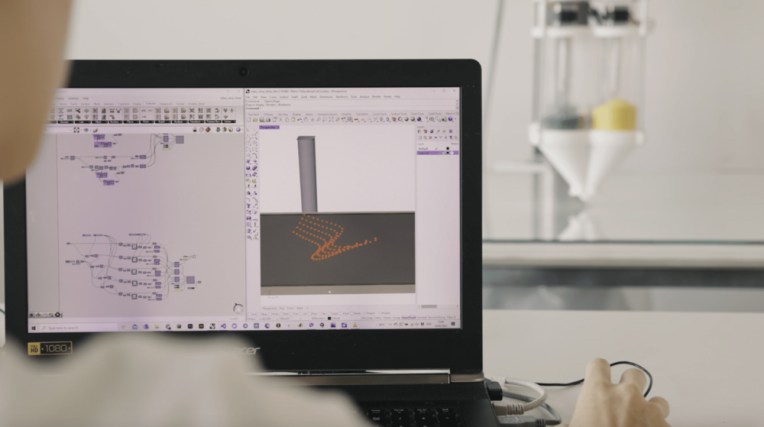
Computational Design
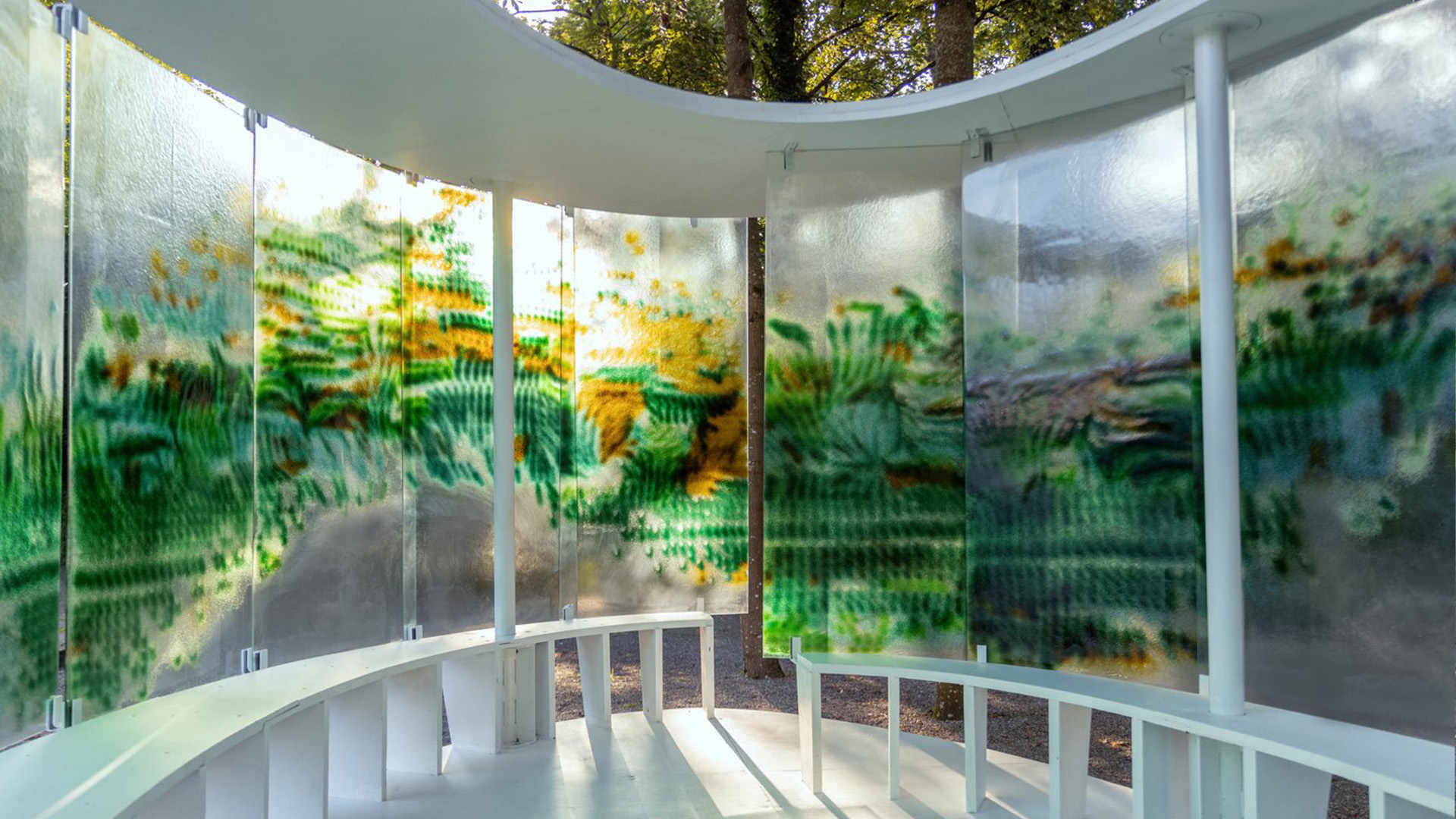
Designers collaborated in teams to develop custom computational tools and design strategies for color and material deposition. These methods enabled control from micro-scale detailing to the full pattern logic across the pavilion. Site-specific qualities were embedded using a point cloud model, allowing each panel’s color and transparency to respond to its orientation and environmental context—creating a dynamic filtering effect attuned to the surrounding landscape.
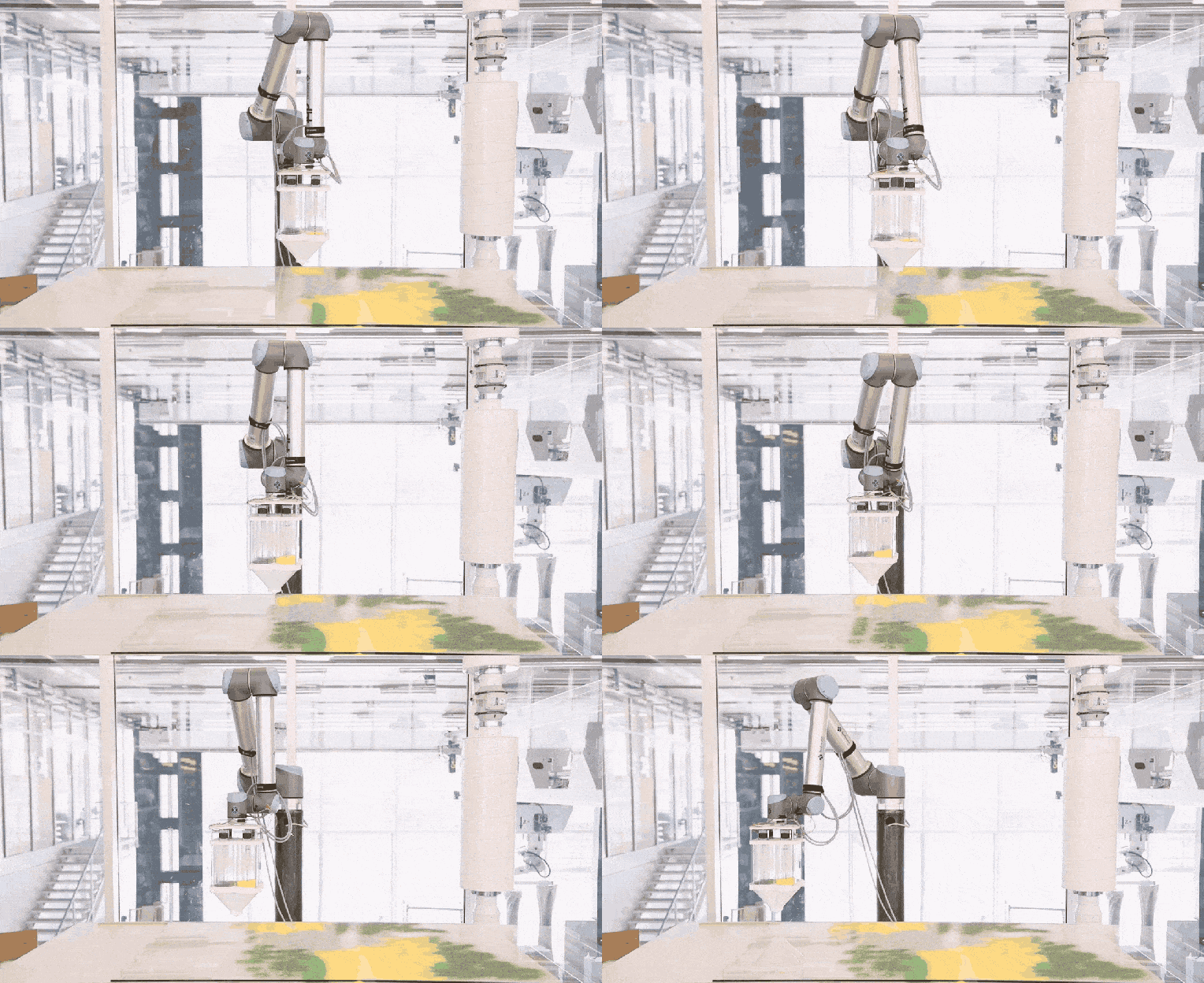
Robotic Fabrication
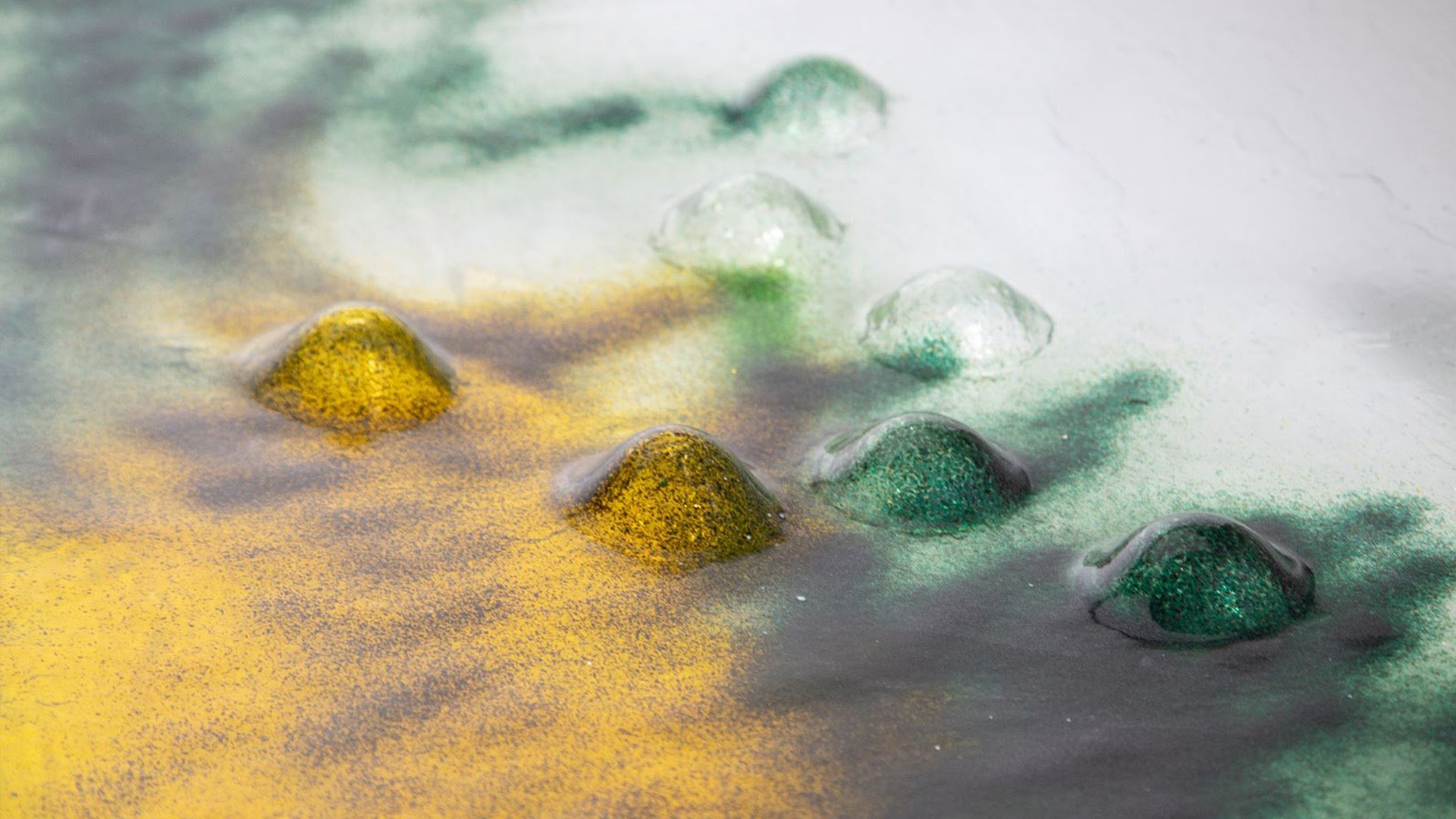
A multi-channel robotic tool was developed to deposit colored glass granules in customizable patterns across each float glass panel. Through strategic control of robotic parameters and brush paths, iridescent designs were created, later fused into a single polychromatic element in the kiln. This process enabled the expressive use of granular materiality and high-precision, panel-specific fabrication.
Phase 1 – Panel Testing & Prototyping
To build team-wide understanding of the process, students formed small groups to develop computational design tools and prototype glass panels. Each group fabricated four 160 × 320 mm test panels to explore material behavior and design strategies.
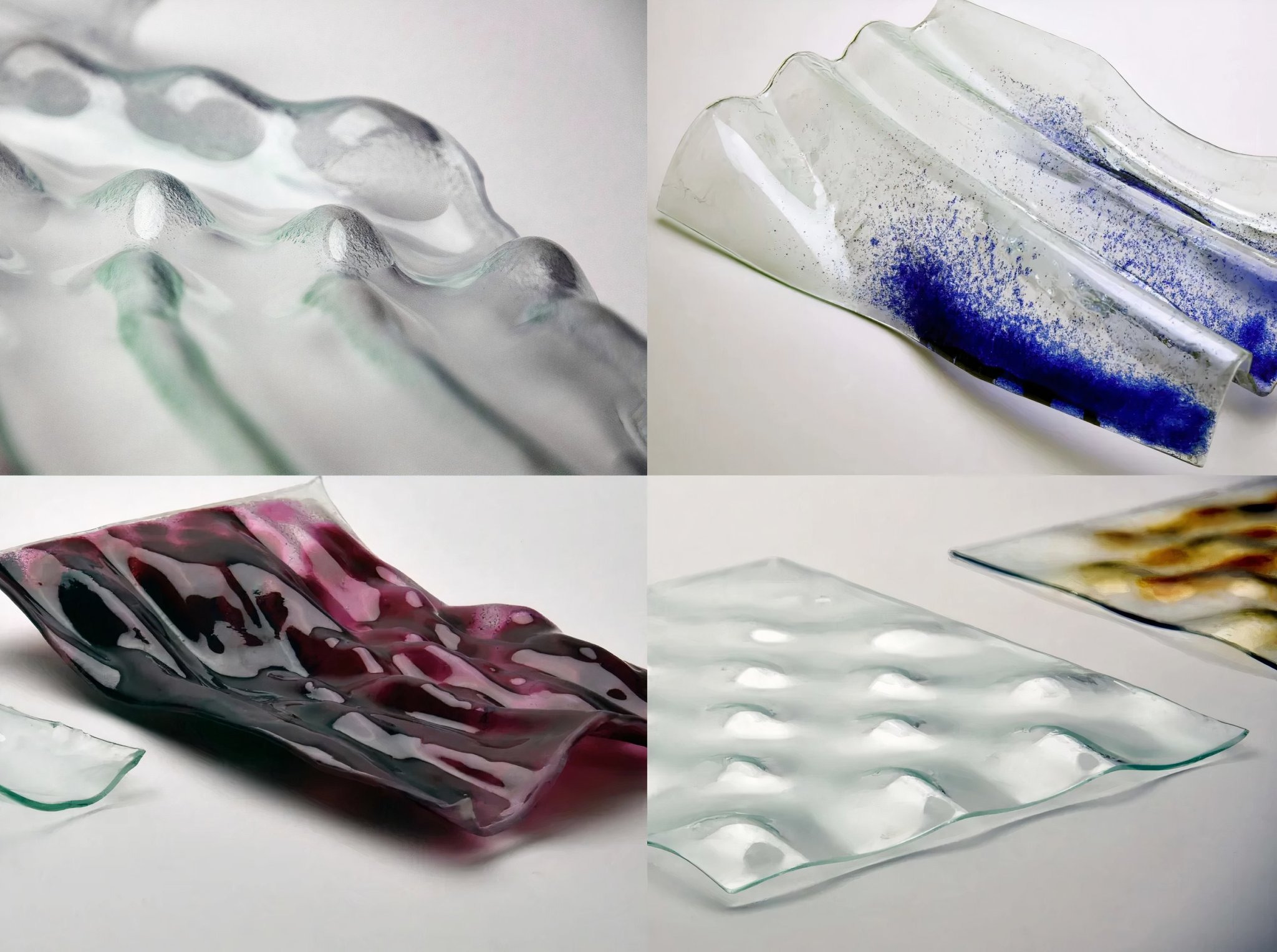
Phase 2 – Full-Scale Fabrication & Pavilion Assembly
The 40 m² pavilion, designed for the Swiss Re Centre for Global Dialogue in Zurich, features 18 uniquely fabricated glass panels arranged along an oval footprint. Each full-scale panel demonstrates how standardized float glass can be robotically enhanced with site-specific color, opacity, and texture. The result is an immersive space that redefines transparency and reframes the surrounding landscape through material innovation.

 Chan Yen Fen